
THE HEADSHOT JOURNAL · DALLAS–FORT WORTH
Headshot vs. Business Portrait: What’s the Difference?
Learn how headshots and business portraits differ, where each works best, and what to ask before your session.
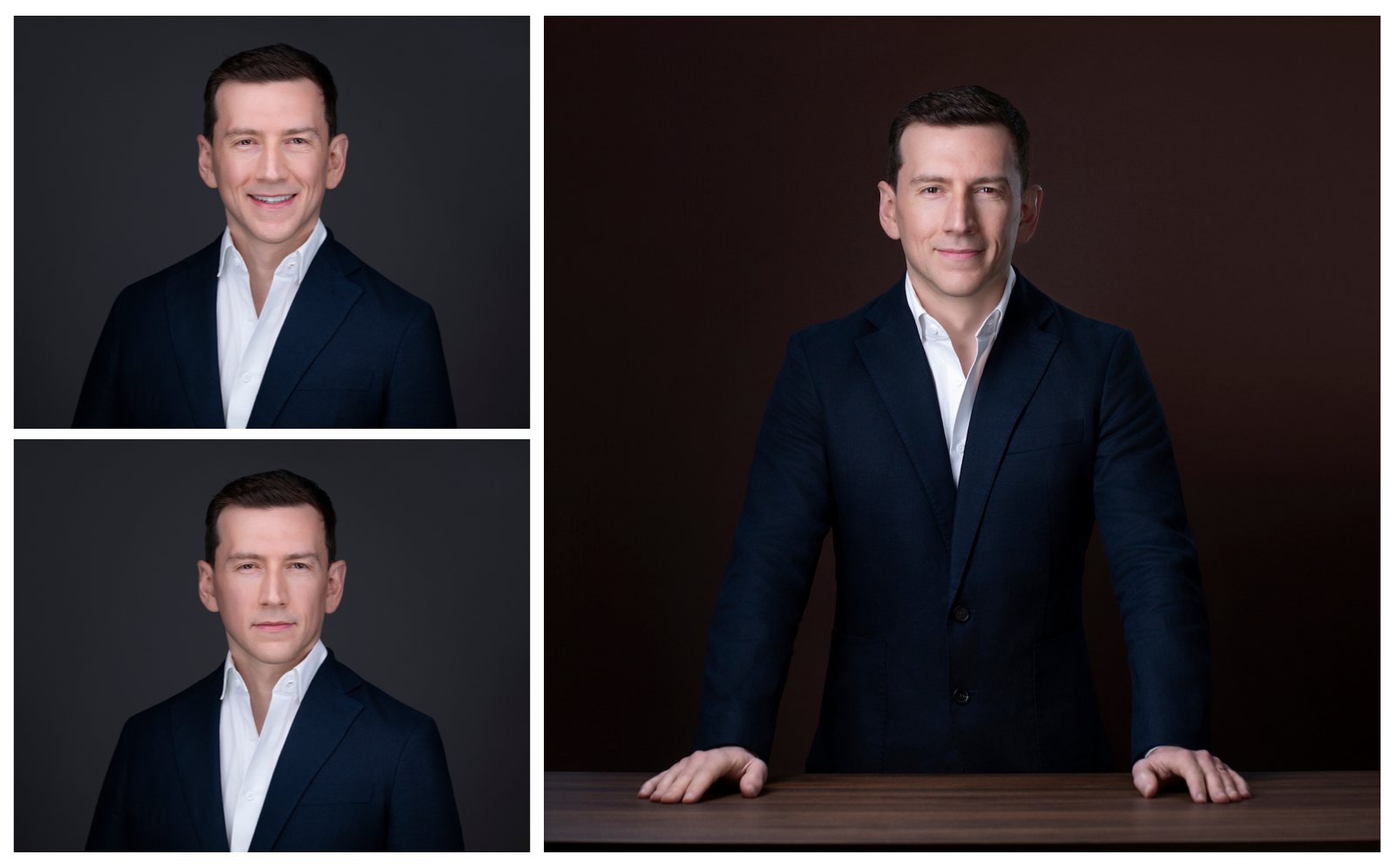
A headshot keeps the attention on your face and expression. A wider business portrait gives more space to your posture, clothing, and surroundings. Both can represent you professionally; the useful choice depends on where the photograph will appear and what it needs to show.
For professionals, executives, entrepreneurs, and leaders, that might mean a close image for a company directory, a seated portrait for a website, or both. Understanding the formats helps you explain what you need before you step in front of the camera.
What is a headshot?
A headshot is a closely framed portrait, usually showing the head and shoulders or upper chest. Your face occupies enough of the image to remain clear when the photograph appears at a small size.
Headshots are commonly used for LinkedIn profiles, company directories, email signatures, speaker profiles, and press materials. The background can be a studio backdrop or a location; the defining feature is the attention given to the person’s face.
Expression matters within that framing. An open smile and a quieter expression can each suit a professional image. The right choice depends on how you want to present yourself and the context in which the photograph will be seen.
What is a business portrait?
A business portrait is a portrait made for professional use. It can be closely framed, although the term is often used for wider photographs that show more of the person or their surroundings.
A seated, half-length, or full-length portrait brings posture, hands, and clothing into the composition. An environmental portrait may also show a workplace or an activity. A simple studio setting can work equally well when the person is the main subject.
These photographs can support website About pages, editorial features, speaking materials, and professional branding. Their wider composition gives a designer more to work with when a layout needs body language, context, or space around the person.
Executive headshots vs. executive portraits
An executive headshot is a close professional portrait used for a leadership profile, company directory, LinkedIn, or a speaker biography. The framing keeps attention on the face and expression.
An executive portrait can use wider framing to include posture, hands, clothing, or a setting. It may suit a leadership feature, website About page, or editorial layout. These terms overlap, so the intended use and crop requirements are more useful than the label alone.
Is a headshot a portrait?
Yes. A headshot is one form of portrait photography. Portraits can also be close-ups, and neither a particular background nor a specific lighting style separates all headshots from other portraits.
Photographers sometimes use the terms differently. Sharing an example and describing the intended use is more useful than relying on the label alone.
See the difference in these photographs
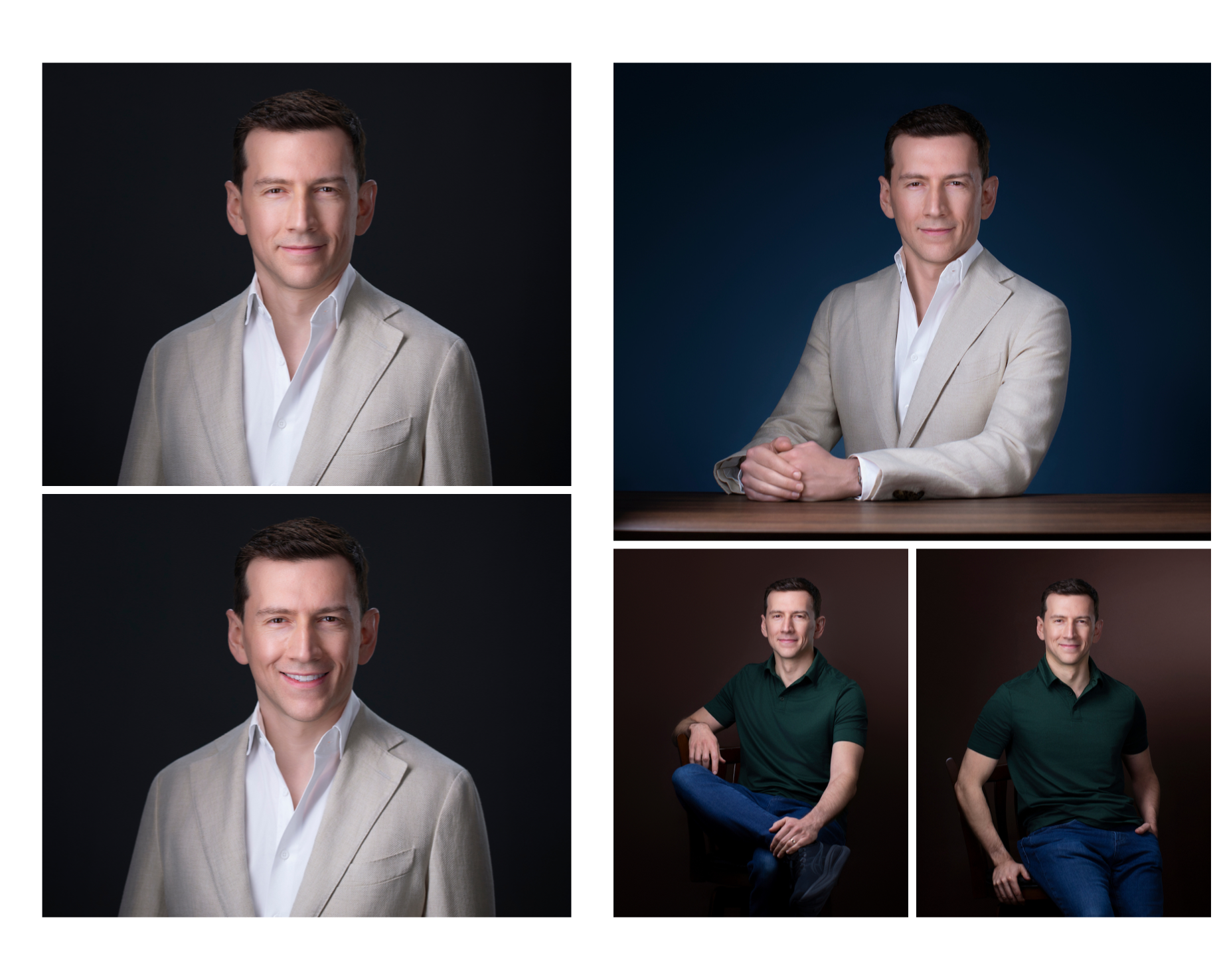
The headshots keep the face prominent while showing different expressions and jacket choices. The close framing makes his expression the main point of attention. Each could suit a profile or directory after the final crop is checked.
His wider portraits show seated and standing compositions, with hands, posture, and more of his clothing visible. Business and casual outfits offer different options for a biography or website layout with room for a wider image.
The examples show how framing changes what the viewer can see. They also show why image orientation alone does not tell you whether a photograph is a headshot or a wider portrait.
Which format fits your intended use?
- LinkedIn, an email signature, or a small directory tile: A close headshot usually keeps your face clearer at small sizes. Check the square or circular crop.
- A company biography or leadership page: Follow the organization’s format. It may require matching headshots or allow wider portraits.
- A website About page: Look at the page design. A headshot, a wider portrait, or a combination may fit.
- A speaker announcement or press feature: Ask the organizer or editor about orientation, crop, and space for text.
A job title does not determine the format. An executive may need a simple headshot, while an entrepreneur may need both a profile image and a wider photograph for a website.
Can you crop a wider portrait into a headshot?
Sometimes. The original needs enough detail for your face to remain clear after cropping. Hands, clothing, and surroundings will disappear from a close crop, so check whether the remaining image still works.
The reverse has a limit: a tightly framed headshot cannot provide the body or surroundings needed for a wider composition. If you know you need both formats, plan to photograph both.
For projects involving several professional uses, our guide to building an executive visual library explains how to plan a collection.
What to discuss with your photographer
Bring examples of the pages or materials where your photographs will appear, along with any requirements from an employer, designer, or event organizer. Explain whether you need a close profile image, wider compositions, or both.
Discuss clothing, backgrounds, and the expression you prefer. At Godoy Shots, Nabor guides expression and posture and reviews images with you as you work, so you can see how those choices affect the photograph.
HEADSHOTS AND PORTRAITS, EXPLAINED
FAQ
Where can I get executive headshots and business portraits near Dallas?
Godoy Shots Photography offers guided headshots and business portraits at our Farmers Branch studio, serving Dallas, Addison, Plano, and the wider Dallas–Fort Worth area. Nabor Godoy guides expression and posture and reviews photographs with you during the session.
Does a headshot need a plain background?
No. A plain studio background is one option. A location can also work when the background supports the image and your face remains the main focus.
Do I have to smile in a professional headshot?
No. A smile or a more reserved expression can be appropriate. Compare options and choose one that feels comfortable and suits its intended use.
Does a business portrait have to show the whole body?
No. It can be a close-up, a seated or half-length composition, or a full-length photograph. The framing should suit what the image needs to show.
Can I use a wider portrait on LinkedIn?
Yes, if the final profile crop keeps your face clear. Check it at the size people will actually see; a photograph that works across a website banner may need a different crop for a small profile image.
About Nabor Godoy
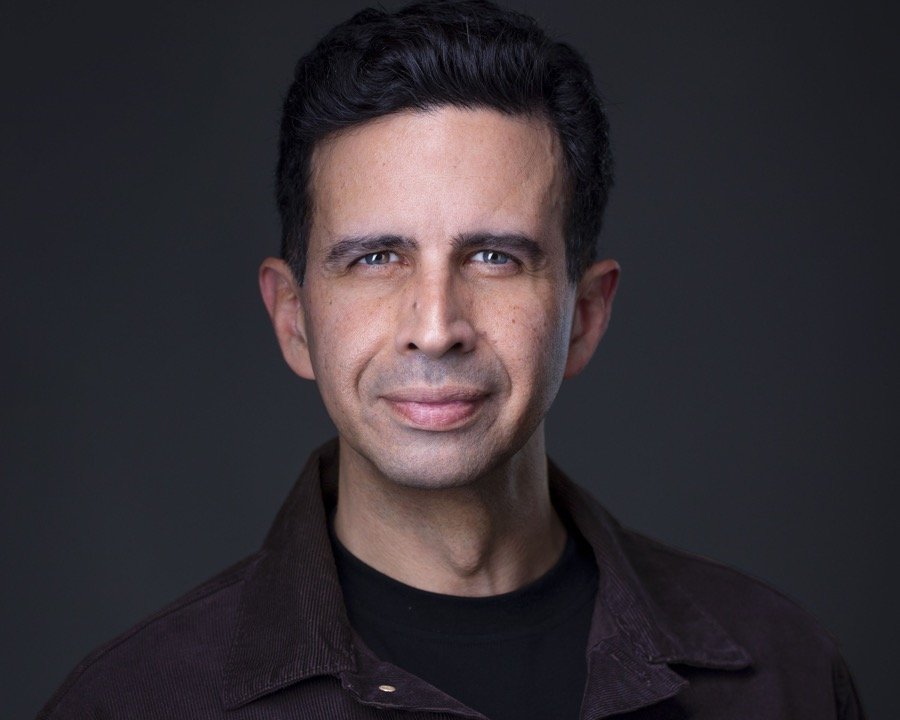
Nabor Godoy is a professional headshot and portrait photographer and a Headshot Crew Associate Photographer. At the Godoy Shots studio in Farmers Branch, serving Dallas–Fort Worth, he provides expression and posing guidance, live image review, and help selecting photographs for professional use.
Plan the photographs you need
Once you know where your photographs will appear, choose the studio time and pace that suit your plans. Our Essential and Signature session comparison explains the current options. You can also ask us for help planning your session.